• Home
  • About Me
    • My Bio
    • Sponsor Info
    • Giveaways
    • My Other Freelance Writing
    • Video Hello
    • blogging advice
  • Love + Relationships
    • Dating
    • Engagements
    • Letters to my future husband
    • Love Lounge
    • marriage
    • Memo To Men
    • Open Letters
    • Singlehood
    • virginity
    • Weddings
  • Fashion + Style
    • beauty
    • do or don’t
    • fashion
    • hair
    • jewelry
    • men’s fashion
    • women’s fashion
  • Art + Design
    • art
    • design
    • dream home
    • flowers
    • illustration
    • Photographs
    • posters
    • tattoos
    • typography
  • Disability Dialogue
    • body image
    • Dating
    • Dating With Disabilities
    • depression
    • disabilities in the media
    • Disability
  • Life + Leisure
    • babies
    • birthday
    • books
    • dream vacation
    • Entertainment and Media
    • etsy love
    • family
    • food
    • gift guide
    • holidays
    • In The Pursuit of Happiness
    • link love
    • magazines
    • Man Candy
    • movies
    • music
    • peek inside
    • Shopping
    • TV
    • would you rather

Wednesday, July 8, 2015

The Science of Love: An Expert’s Guide To Flirting

Yesterday, we kicked off The Science of Love, a new feature on So About What I Said that will see me flexing my journalistic muscle. Here’s Part Two of my chat with Laurie Davis from eFlirt, the online dating experts. Enjoy, friends! xoxo

********************

How do you handle a guy who is all about the flirting and never moving beyond that or making the next move (not that I speak from personal experience…)?
If a guy is flirting, but things aren’t moving any further, I’d recommend giving some subtle nudges or taking control of the situation. If you’re still unsure he’s flirting, do the subtle nudge. If it is clear he likes you, just go for the close! For online dating, this translates to exchanging phone numbers or setting a date. There is nothing wrong with a woman asking for either. In fact, sometimes guys will wait for you to suggest it because they want you to feel comfortable and are not sure how long you want to email before transitioning offline. Don’t be afraid to keep the process moving along. If you email incessantly, you risk losing his interest.

What are some of the worst pick-up lines you’ve ever heard used?
Pick-up lines are a big no-no. And I mean, in any situation. Just don’t do it. We’ve heard them all a million times, and they are not going to help your flirting cause. My least favorite has to be the line, “Did it hurt when you fell from heaven?”

How can you tell the difference between a guy who is just generally flirty and a guy who is flirting with you because he, for lack of a better word, likes you?
When you’re in person, see how he/she is interacting with others. Is their body language similar with others in the group? Are they being just as saucy when they talk to your friends? Then they’re probably not flirting with you.

(This post is part of a series called The Science of Love, where it’s all about the tango of love, or so I’ve heard. Have a burning topic that you’d like to see covered? Email me at mellow1422@aol.com and let’s chat!)

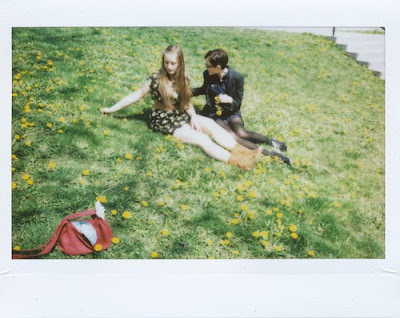
[Photo via We Heart It]

  • Facebook
  • Twitter
  • Pinterest
  • Email

Leave a Comment Filed Under: A Woman's Word, Dating, From The Experts, Interview Series, Love Lessons, Online dating, The Science of Love, The Science of Love series, Uncategorized

Tuesday, July 7, 2015

New Series: The Science of Love

(This is the first post in a new series called The Science of Love, where I’ll be putting my journalistic nose to the grindstone in the name of love. Look for interviews from experts on everything from dating to decoding the language of that two-word text. It’s all about the tango, or so I’ve heard. Have a burning topic that you’d like to see covered? Email me at mellow1422@aol.com and let’s chat!)

********************

We all know I’m pretty much one giant awkward klutz when it comes to all things flirting. I just don’t have one single flirty bone in my body, and more often than not, my attempts at wooing the boys comes off as anything but subtle.

But I hear there are people that can flirt effortlessly. Some might even say they’ve got it all down to an art. I wanted to do some research in the field, but since I’m not bold enough (yet!) to flex my flirt muscle in a trial-and-error style, I turned to the next best thing!

Meet Laurie Davis from eFlirt, the online dating experts. I had the chance to interview her a couple years ago on all things flirting and the changing landscape of technology and dating. Here’s Part One of our chat — look for Part Two tomorrow!

How has flirting changed in the last 10 years, especially with the prevalence of technology?
Flirting has changed a lot in the last 10 years. Now, not only can you flirt in person, but you can flirt online. You can use online dating sites, social networking platforms and iPhone apps. Of course, “there’s an app for that” too. You can use GPS locator apps to find matches at the same bar, and you can approach them via message rather than with a handshake. It’s even socially acceptable to flirt via text, with the possibility of it turning into a sext.

Flirting by way of technology takes away some of the indicators that it is, in fact, flirting — like body language, eye contact and blushing. Flirting virtually sometimes means that you need to be bolder and more outspoken. Subtly doesn’t always come across when it is text-only. People also often let their guards down sooner and say things that they wouldn’t otherwise if the flirting happened in person.

How do men and women’s styles of flirting differ? Could you give me a few examples?
Actually, I try not to generalize by saying “men do this” and “woman do that.” I approach everything on a case-by-case basis with my clients. For example some men are too outspoken and some are too shy. It depends on the person.

I admit I’m an incredibly awkward flirt, especially considering my disability. What advice do you have for me?
I’ve read some of your articles and the wheelchair seems to be one of the big problems you face. When you meet online, the metal and wheels won’t seem so intimidating. You should definitely talk about it, but without it staring them in the face, it probably won’t be such a big thing to overcome.

When you’re face-to-face with a cutie, body language is one of the key factors that tells someone you are flirting. When you’re planted in a seat, you are limited, but you can still flirt your butt off! (No pun intended!!) I’d recommend practicing some things in front of the mirror. I know this sounds silly, but being aware of how your body looks when you do certain things, particularly when you are limited, is important.

Thanks, Laurie! Feel free to share your own experiences in the comments, friends, and check back tomorrow for Part Two of our interview! xoxo

  • Facebook
  • Twitter
  • Pinterest
  • Email

Leave a Comment Filed Under: A Woman's Word, Dating, From The Experts, Interview Series, Love Lessons, Online dating, The Science of Love, The Science of Love series, Uncategorized

Thursday, November 1, 2012

What are your favorite fairytales?

Confession: I love fairytales (except Peter Pan…). Well, maybe this isn’t so much a confession as it is a reaffirmation, which usually comes around this time every year. We greeted waves and waves of trick-or-treaters last night as they scoured our neighborhood in the hopes of filling up their bags and buckets with sugary treats. There were policemen and little ones sitting timidly on their father’s shoulders. And of course, there were princesses in pink, puffy dresses. Some even carried magic wands, too. I got to thinking about where our love of fairytales begins — how early? Why? What lessons do they offer? A few years ago, I interviewed Theresa Rose, author of Opening the Kimono: A Woman’s Intimate Journey Through Life’s Biggest Challenges, on this very subject and thought it would be fun to dive into the world of fairytales today, friends…


Why have these fairytales transcended time and remained relevant even in 2009?
Despite how totally unrealistic and even harmful these stories are, little girls (and big girls) everywhere are drawn to them like moths to a flame. There is something so appealing about imagining oneself as the prettiest, most sought-after girl in the room. We get to wear fancy clothes, have men fight dragons for us and essentially have no responsibility whatsoever for our own happiness. When shown through that prism, becoming Snow White sounds pretty good to me too. It’s the same base desire that had women flocking to the theaters to see Sex and the City.

How can women use these stories to benefit their own lives?
I believe the biggest benefit from these stories is to show women where they learned patterns of victim hood and unreasonable fixations on appearance. Women should look at challenges in their lives and ask, “What Wouldn’t Snow White Do?” We can be our own heroes instead of waiting for a man to save us. Although, I must admit that Cinderella reminds us of the power of wearing a killer pair of heels.

Who are the best heroines and why?
The best fairytale heroines are Belle from Beauty and the Beast and Fiona from the Shrek series. Belle taught us that reading is cool, and what is on the inside of someone is more important than what’s on the outside. Fiona taught us that you can get the love of your dreams and still have terrible skin, a barrel for a belly, a bulbous nose and freaky ears. She is responsible for her happiness, sticks up to her man when called for and chooses her own destiny over what other people think. Fiona ROCKS!

What’s your favorite fairytale, friends? Which ones did you love reading as a child and why? What lessons did you learn from them? Do these lessons still hold true in adulthood? xoxo

P.S. And I love what Los Angeles-based therapist Dr. Nancy Irwin had to say: The Prince may not be on a white horse; he may drive a Ford pick-up.” :)

[Photos via We Heart It]

  • Facebook
  • Twitter
  • Pinterest
  • Email

8 Comments Filed Under: A Woman's Word, books, childhood week, fairytales, From The Experts, lessons from fairytales, Love Lessons, Uncategorized

Tuesday, April 27, 2010

Tales From The Trenches: Tales #33

We have a very special writer joining us today! Andrea Syrtash, author and the host of On Dating, produced by NBC Digital Studios, releases her newest book today. In He’s Just Not Your Type (And That’s a Good Thing), she empowers woman against falling into the trap of settling just to settle down. Part of her strategy for finding love? The ever-powerful Love Checklist.
When I was 16, my “type” was a guy who drove a motorcycle, had two earrings and grunted when I asked him questions. I don’t remember ever having a very deep conversation with this guy, but I remember how good he looked in a white T-shirt and tight acid-wash jeans (hey, it was the ’80s). At 20, I dated a guy in my college dorm who was whiter than Wonder Bread and found my “Jewishness” exotic. He was a good kisser, and I liked that he found it endearing each time I argued that bagels were a food group, but really, I had nothing in common with him and I knew it.

When you’re young and new to dating, a guy’s cool factor or the way he looks in jeans may rank higher than how emotionally or spiritually connected you feel to him or that he brings out great qualities in you. At this point in your life, your criteria for a mate aren’t usually based on how he would be as a father, a provider and a partner. In many ways, our teen years and early 20s are about exploration—learning who we are and ultimately making some mistakes from which we can grow. And yet, I meet so many women who are still hanging on to the “type” of guy they were attracted to eons ago. Most of these women have met new and diverse groups of friends who are different from the ones they chose as teenagers, or have embarked on a different career path than the jobs they graduated with. In many cases, their choices and their lifestyles have evolved.

So many of us get into a pattern in our dating lives, and our lives in general, in which we do things because we have always done them that way. We don’t question our routine because it’s comfortable (and frankly, who has the time or energy to find alternatives when things are okay?). We do what we know. We are creatures of habit, after all.
When we are living in this passive way, it is as if we are pressing the snooze button on our lives. We are almost awake—but not quite. (Isn’t it funny, too, that sleep researchers say that pressing snooze a number of times in the morning actually makes for a more tiring day?) In this regard, we are not living consciously. And when we do not live consciously, we make choices that may not serve our best interests.

Love Lists
The list of criteria you are looking for in future mate should evolve as you evolve. It should not resemble the long list you draw up before you head to the grocery store or the checklist you give to your real estate agent when you are looking to move. For one thing, you are decreasing your chances of finding a relationship if your list it too long and specific; and another, you are taking all the romance and spontaneity out of the process of truly connecting with someone you have not met yet! I once heard a guy say that he could not describe his perfect woman before he met her, just as he can’t describe a beautiful painting before he has seen it. Depending on your perspective, this guy is either wonderfully romantic or terribly cheesy…but he has a point!

It’s important to be mindful of the qualities you would like to find in a partner. Creating a simple must have/can’t stand checklist can help you to get clear on things you feel you can or can’t live without in a future mate. Make sure to distinguish your needs from your wants and your preferences from your absolute deal breakers. You may prefer someone who is more than 6 feet tall but realize you have more important characteristics that you “must have” in a partner. (My friend Dan is 5’8″ and used to be frustrated that women online said they wouldn’t date a man shorter than 5’9″. He said, “Would these same women be disappointed if someone who looked like Jude Law or Tom Cruise walked in for the blind date?”)

I like to confine the must have/can’t stand list to five things on each side so you can stay open-minded and not limit yourself by trying to follow a long laundry list. So, take out a piece of paper and make your new checklist!
Name five things you must have in a mate and five things you can’t stand. It can be as silly as wanting your partner to dance to as serious as wanting to be with someone of the same faith. Whatever is important to you, write it down. In some cases, one side will reflect the opposite of the other. If you are not attracted to bald men, put baldness as a “can’t stand!” You are entitled to some deal breakers—even superficial ones—when looking for your future mate. One of my clients volunteered to share her must have/can’t stand chart:

Must Have / Can’t Stand
• Generosity / Self-centered
• Send of humor / Unmotivated
• Self-awareness / Arrogance
• Family values / Sense of entitlement
• Attractive (I want to kiss him) / Argumentative

Dating Dare
Include, “He must be really into me” as one of your five must haves. Those six words will automatically affect your dating success.

When you consider men you’ve dated in the past, did they fulfill your must have/can’t stand list? When you are forced to really home in on what’s most important to you, you will find more clarity on the kind of person you would like to date and automatically create different results.

Stop pressing snooze on your life. Wake up to what will bring you true fulfillment in and out of a relationship. Live authentically and consciously—in life and in love!

[Photos via Andrea Syrtash and Audrey Hepburn Complex]

  • Facebook
  • Twitter
  • Pinterest
  • Email

9 Comments Filed Under: From The Experts, Love Lessons, Tales From The Trenches, Uncategorized

Wednesday, January 6, 2010

From The Experts: Helping The Disabled Take The Road Less Traveled.

This week for Disabled and Thriving, my Psychology Today magazine blog, I had the pleasure of interviewing Lance Blair. His non-profit organization, Disabled Explorers, Using independent, individualized, backcountry four-wheel-drive travel, the organization helps those with disabilities explore life and nature off the beaten path. Hope you enjoy his inspiring words! xoxo

Tell me a bit about your background and how the organization came about
A drunk driver forever altered the course of my life when he struck my motorcycle and shattered my hip, resulting in the loss of my lower left leg below the knee. At eighteen years old, I had a colostomy bag and used a wheelchair. Luckily for me, within six months the colostomy was reversed, and I had a shiny new leg. The past twenty-plus years have been worth every bit of the long intensive care stay, multiple surgeries and pain. As an amputee. I have come in contact with amazing people, wanted to do more and go farther and come to value my time on Earth to a greater degree than I would have otherwise. While I would never recommend a traumatic accident to anyone, I know the trial by fire forged me into a stronger person.

Disabled Explorers was founded to enable other disabled people the same independent backcountry travel experiences that I treasure. Enjoyment of remote areas, historic sites and ancient ruins should not depend on someone else to build facilities if we can find solutions to allow free and independent travel.

We started with a four-wheel-drive SUV and now have the Wheelchair Accessible Van for Expeditions. The W.A.V.E. and its volunteer support give people with physical mobility challenges a chance to drive to those places that have not been accessible and may never be.

Our program is not a “tour bus.” The participant is most often the driver, is part of the team and is empowered by the acceptance of the able-bodied along on the adventure. Cooking, cleanup, setup and tear down are equally shared by all regardless of physical challenge.
What do you think is the biggest stereotype or misconception about people with disabilities? Why?
That a person has to learn to accept limitations and that dependence on a government or other authority to choose where you will be able to travel is just how things are.

The USA is a country that thrives on choice and a desire to live one’s life to the fullest, yet it is assumed that the disabled person will no longer have dreams and aspirations due to their physical challenges or must give them up. Disabled Explorers strives for the day when someone in a wheelchair making it to the top of a mountain is normal enough not to be newsworthy.

How can people – both those who are disabled and those who aren’t – work to combat those stereotypes?
The disabled combat stereotypes by not giving into them, looking for solutions and creating the solutions themselves if need be. The able-bodied need to combat stereotypes by seeing the person beyond the disability — the same heart, mind and soul as they have.
If you could tell society one thing about disabilities, what would it be and why?
That the story within the disabled person is worth hearing, that the physical challenges faced often forge a stronger soul and that friendship is formed with an individual not a classification.

[Photos via We Heart It]

  • Facebook
  • Twitter
  • Pinterest
  • Email

Leave a Comment Filed Under: Disability, From The Experts, Life, Uncategorized

« Previous Page
Next Page »
So About What I Said is a daily blog that covers relationships, disabilities, lifestyle and pop culture. I love to laugh and have been known to overshare. I also have an unabashed obsession with pop music, polo shirts, and PEZ dispensers. Read more...

Let's Be Friends
Pinterest
Facebook
Twitter
Instagram
Bloglovin
RSS

Contact Me
Subscribe by Email

About Us

dotted lineAbout Us
archive

Archives

So About What I Said © 2026 · Design by Maiedae · Development by High Note Designs

loading Cancel
Post was not sent - check your email addresses!
Email check failed, please try again
Sorry, your blog cannot share posts by email.