• Home
  • About Me
    • My Bio
    • Sponsor Info
    • Giveaways
    • My Other Freelance Writing
    • Video Hello
    • blogging advice
  • Love + Relationships
    • Dating
    • Engagements
    • Letters to my future husband
    • Love Lounge
    • marriage
    • Memo To Men
    • Open Letters
    • Singlehood
    • virginity
    • Weddings
  • Fashion + Style
    • beauty
    • do or don’t
    • fashion
    • hair
    • jewelry
    • men’s fashion
    • women’s fashion
  • Art + Design
    • art
    • design
    • dream home
    • flowers
    • illustration
    • Photographs
    • posters
    • tattoos
    • typography
  • Disability Dialogue
    • body image
    • Dating
    • Dating With Disabilities
    • depression
    • disabilities in the media
    • Disability
  • Life + Leisure
    • babies
    • birthday
    • books
    • dream vacation
    • Entertainment and Media
    • etsy love
    • family
    • food
    • gift guide
    • holidays
    • In The Pursuit of Happiness
    • link love
    • magazines
    • Man Candy
    • movies
    • music
    • peek inside
    • Shopping
    • TV
    • would you rather

Monday, August 10, 2015

ADA Final Thoughts: My Journey As a Woman With a Disability

I’ve been thinking for a few days about how I’d like to wrap up our celebration of the Americans With Disabilities Act. The matter feels sort of weight-y, to be honest. I don’t want to just gloss over everything and tie it all up with a pretty pink bow. I don’t want to approach disabilities with a “one-size-fits-all” mentality. And I certainly don’t want to discount all the progress and strides that we’ve all made — and will no doubt continue to make in the future.

It all means more than that. At least, it does to me. In interviewing all these incredible women, I’ve come to see just how powerful of a force we can be. We’re a fierce set of fighters who refuse to back down, especially when the going gets tough and all the odds seem to be stacked against us. Sure, we may have had some curve balls thrown our way, but we never let that stop us.

And still, I’m aware of the possible slippery slope of this “Be All” mentality. It doesn’t help anyone — disabled or not — to place people on such high pedestals, to hold them up as representatives of everyone else. That’s a lot of pressure to live up to, isn’t it? I began to believe I was alone in my thinking, and honestly, I even felt a bit guilty for feeling the way I did (but, as always, in the name of complete honesty…) — almost like I didn’t have a right to feel like that. Then, I read this little gem from Anna Scanlon in one of our email exchanges…

“People with illnesses/disabilities are tasked with being both brave and inspiring. People seem to always want to hear about you being upbeat despite your setback, never that you’re sometimes super pissed off that you have to live with this. I would feel patronized if someone referred my inability to live a normal life as “unique” or called me “differently abled” instead of disabled.”

That’s sort of a light bulb realization, isn’t it? I read that and immediately thought, “YES!! Finally, someone who gets it.” We shouldn’t be afraid to be honest and admit that sometimes, we struggle and get frustrated and feel discouraged.

Really, I’ve always felt as though our stories and our lives weren’t that different. My story could very well be your story and vice versa. I don’t have all the answers; I’m just trying to figure it out like everyone else. I’ve often talked about how this is the story of a woman with a disability looking for love, but maybe that’s not the whole story. Maybe it’s not really about me finding my soulmate or the man of my dreams. Maybe it’s about me finding the inner love I have for myself and coming to terms with my disability.

If I’ve learned anything, it’s that everyone’s story is different and everyone’s story is worth telling. And those, my friends, are the stories we should tell. And keep telling — to everyone who will listen. xoxo

[Photos via That Kind of Woman]

  • Facebook
  • Twitter
  • Pinterest
  • Email

1 Comment Filed Under: ADA 25, Americans With Disabilities Act, Americans With Disabilities Act anniversary, disabilities in the media, Disability, Uncategorized

Tuesday, August 4, 2015

Americans With Disabilities Act: “I am DISABLED. And you know what? I’m okay with that.”

One of my “favorite” things about having Freeman-Sheldon Syndrome is finding others who also have it. I first met Julie when she wrote to me after reading So About What I Said. She was interested in my experience with FSS and it was amazing talking to someone who went through some of the same things I did. I asked Julie to share her story, and I’m so glad she said, “YES!!”

My name is Julie Roda. I am 29 years old and live in Massachusetts. I was born with a rare genetic disorder called Freeman-Sheldon Syndrome. This syndrome causes severe contractures in the joints of the body. I have had 32 orthopedic surgeries to correct the abnormalities. I have scars on my arms, legs and back. I have a steel rod down my spine, screws in both my knees and a metal implant in my hand. I walk with a limp and wear a knee brace. My hands are visibly malformed and don’t work as they should. I am DISABLED. And you know what? I’m okay with that.

It took me a long time to admit that about myself. Growing up, my parents’ expectations of me were no different than any other child. I could do anything anyone else could, which sounds nice in theory. But the older I got, the more I realized that just wasn’t true. Instead of honing in on the things I excelled at, I spread myself too thin with activities that I just wasn’t meant for in order to prove to them — to the world — that I was just like everyone else. Because of that, I often failed, quit or worked myself beyond my physical limits.

For a long time, my dream was to become a nurse, work with children and give back to the community that had given so much to me. I got into an accredited private college with an excellent program. It was my dream coming true and I excelled in my classes. The problem came during my sophomore year when clinicals were starting to be scheduled. Before I was accepted into the college, I met with the board of the nursing program. I let them know about my physical limitations, specifically my concerns about the amount of time I could stand and how much I could lift, but that I was more than capable of becoming a nurse in a manner that could be accommodating. I was ‘assured’ that they would work with me and place me in more suitable settings. They prided themselves in being handicapped-accessible in all aspects of the school. Well, here I am, almost two years later in front of the same people now telling me they ‘are very sorry, but [they] don’t handle the scheduling anymore and can’t guarantee what positions I’d be placed in.’ I fought. I had people in my corner. I had the grades. But I was young and only had their word that they would be able to accommodate me. Do I risk hurting my body even more? I was already scheduled for two knee surgeries. I knew my limitations and watched my dream crash into a million pieces.

I tried majoring in hospital management, but quickly lost interest in anything school-related and ended up leaving at the end of my second year. I then started the tortuous task that is job hunting. With no education, experience or skills, I rarely got a call back. When I did, it wasn’t those lacking attributes that didn’t land me the job. It was often me. No one would ever say anything, but I knew the routine. I could tell if I’d be offered the job just by the expression on the interviewers face when we first met. I got the ‘You’ve-got-to-be-kidding-me’ expression as we shook hands limply. They’d lead me to the interview room, ask if the seat is ‘OK for me’ and sit as far across the table as possible. They’d browse my resume for half a nanosecond, and then look up at me with an uncomfortable smile. They’d ask two irrelevant questions and back out the door I went, never to return. Interviews are awkward enough; knowing my disability could be so unnerving to some people has always been a hard pill to swallow.

I was getting nowhere, so I went to the Massachusetts Vocational Rehabilitation Office. This office helps people of all disabilities find and maintain work in accommodating settings. I was offered a job working remotely from home for a company in Florida. I finally found the perfect workplace — home! I had everything I needed. I could accommodate myself in any way. I could get up to walk around, and I could even go lie down if I needed to! Unfortunately, I was laid off a year later, but that job put ideas into my head about my future career path. I had heard there was a lot of opportunity for working at home in the medical coding and billing field. I decided to go back to school after 3 years. I went to a local community college and had an excellent experience. Everyone was accepting, the campus was accessible and my professors were more than accommodating. I worked with a wonderful woman from disability services who guided me through assessing my needs and making modification plans for each school year. I graduated with honors, received an award for my achievements in the medical coding and billing program and became a Certified Coding Associate.

Although it was my plan to work from home, I received a job offer shortly after I graduated. I made the decision to take it because I wanted the experience. I was working six hours a day five days a week. I felt fine at first. The office understood my limitations and allowed me to make any adjustments I needed. Even though I brought my arsenal of pillows, a stool, an ergonomic chair, everything I needed to be comfortable, my back pain came in slow but strong. I had scoliosis as a teenager and a metal Harrington rod was inserted into my back to straighten it. Since that surgery, I’ve acquired indescribable pain in my upper back, neck and shoulders. It came to a point where I just couldn’t do it. I spoke with the Human Resource Manager and to my surprise, they offered me a lighter job with less hours. But the damage had been done — the strain from repetitive motion caused me to pull a muscle that left me in so much pain that I couldn’t drive to work, let alone sit there for 4 hours. This was an exceptionally accepting business office, though, and I appreciated my experience there.

Right now, I’m in what I like to call ‘limbo.’ My pain is so severe that I am having surgery to remove the metal rod this fall. I don’t want to start a new job right before this, and that’s if I were able to work. I’m on government assistance right now. Yeah, I said it. It isn’t easy to. I hear how people talk about ‘those leeches‘ using and abusing the system, and there are some. I pulled up to the Food Stamp office once and saw a person, card in hand, get into a brand new candy-apple red Jaguar. It made me as angry as it makes everyone else. I don’t plan to be on it forever. I hate not working. I’m praying this surgery will help so I will be able to work and be a contributing member of society.

I’ve had quite a few bumps in the road, but I chalk it all up to experience. I still have so much more to learn. My journey is far from over. I am thankful that I live in a country that gives the disabled the same rights as everyone else. Those of us that have disabilities share the same dreams, goals and aspirations as any other person. The Americans with Disability Act of 1990 made it possible for us to achieve them.

  • Facebook
  • Twitter
  • Pinterest
  • Email

1 Comment Filed Under: A Woman's Word, ADA 25, Americans With Disabilities Act, Americans With Disabilities Act anniversary, disabilities in the media, Disability, Inspiration, inspiring women, Uncategorized

Friday, July 31, 2015

Americans With Disabilities Act: “10 Things I Wish People Knew About Disabilities”

From Australia… to the United Kingdom! San Francisco resident Anna Scanlon is currently pursuing a PhD in history from the University of Leicester in England, where she’s also a writer and author. She chronicles her journey on her blog Anna in Wonderland and you can get to know her on Facebook, Twitter, Instagram and YouTube too! Today, she shares a few things she wished people knew about disabilities…

I can’t speak for everyone who has a disability. There are so many disabilities and each person that has one is a unique and complex individual, with their own thoughts and opinions. So with this, I can only speak about myself and my experiences; however, I will be speaking in generalities as this list encompasses things many disabled people and I have discussed.

For those of you who don’t know me, I blog over at Anna in Wonderland. If you peruse my blog for a few moments (unless you’ve happened on a post about health), I probably look like a perfectly healthy woman. However, that is not the case. Since I was 20-years-old, I have had a disease called Lupus SLE. Although it is very complicated and each case is different, I sum it up by saying that it means my body mistakes its own healthy tissue for invader or “sick” cells and attacks it. This results in mind-numbing fatigue, arthritis, generalized pain and feeling like I have the flu a good several times a month. Thus far, my Lupus has not been life-threatening, but as you can imagine, it can be fatal as the body may begin to mistake a vital organ for an invader.

With that in mind, here are 10 things that I wish people knew about disabilities…

1. Not all disabilities are visible: Just because you can’t see outwardly what is wrong with someone, don’t assume that they’re faking it for a parking pass or to cut the line at Disneyland. Of course, some people play the system, but in my experience, that is very rare. But because not all disabilities are visible, it doesn’t mean you should open your mouth and question someone if you think they are scamming the system. My mom, who had polio as a child and cannot walk long distances due to a deformity in her legs (which can’t be seen when she’s wearing long pants), was once questioned by some random man in a Target parking lot for using her handicap sticker. The bottom line: It isn’t your business and you aren’t the handicap sticker/line at Disneyland police.

2. You can ask questions: This means you take an interest in us and want to know more about the difficulties we face. Lupus isn’t a bad word and you can mention it to me and you can ask me anything. Most people with disabilities feel similarly. It is better to ask than assume.

3. We aren’t looking for sympathy: If we’re sick, you can wish us well or say that you’re sorry, but we don’t need you pointing out all of the things in life we’ve missed or are missing out on. We’re already aware of that, and we don’t need someone to point it out, even in concern.

4. Don’t treat us differently: If someone is in a wheelchair, using crutches or a mobility device, it doesn’t mean they also have an intellectual disability. And if someone is intellectually disabled, they just want to be talked to like everyone else and not talked down to. We’re all people here — and we’re all on this planet rotating through space together!

5. We aren’t summed up by our disease or disability: That is just one aspect of our lives, although it may play a very big part. Everyone with a disability is a complex human, just like those who are not disabled. Unless were at a conference for a disability or positioning ourselves as speakers for a certain disability, we want to talk about other things we are interested in most of the time.

6. We aren’t an inspiration: It’s fine to feel inspired by our stories or grateful for your own life and abilities, but we don’t exist to “teach you a lesson” or to “inspire you to keep going.” We’re people in our own right and have struggles and breakdowns coping with our disability that are less than inspiring!

7. Don’t tell us how young we are: We know most young people don’t go in and out of the hospital or use wheelchairs or canes. We know most young people don’t have arthritis or general pain. We know most young people don’t face the same challenges we do. We don’t need to be reminded of this as it can sometimes make things even harder.

8. We have good and bad days, just like everyone else: Many people with disabilities struggle with accepting their disability, especially if it happened later in life. This can cause a lot of internal turmoil and goes with the idea that we aren’t an inspiration. Just because you don’t see it doesn’t mean we don’t have very challenging days when we just want to give up.

9. Don’t tell us everything happens for a reason: Well, maybe this one is a bit more personal for me as some people may be okay with it. However, I really don’t like being told that having Lupus was part of some grand plan to teach me something or that God has picked his strongest soldiers to fight the hardest battles. Personally, I think sometimes stuff like this comes down to genes and bad luck.

10. Having a disability isn’t our fault: While this may seem like a no-brainer, there has been a recent trend within the last few years that purports certain eating habits result in all kinds of illnesses and disabilities and simply “correcting” them will make you better. This is ridiculous and somewhat insulting to our intelligence. Of course, a healthy balanced diet is key for anyone, but that doesn’t mean cutting out a food group is going to suddenly cure an incurable disease or make someone’s autism go away. Most of us are well aware of the most current research surrounding our particular conditions and would likely already be aware if there was something that could help or cure the disease.

  • Facebook
  • Twitter
  • Pinterest
  • Email

3 Comments Filed Under: A Woman's Word, ADA 25, Americans With Disabilities Act, Americans With Disabilities Act anniversary, disabilities in the media, Disability, Inspiration, inspiring women, Uncategorized

Friday, July 31, 2015

Americans With Disabilities Act: A Parent’s Perspective

I’ve always said that behind every person with a disability is a parent or caretaker — someone who fights for them, advocates for them and cheers them on when the going gets tough. That’s why, when we talk about living with a disability, we can’t leave out our parents, who are a huge piece of the puzzle. I asked my mom to write a few words about her experiences over the years, especially since the ADA was passed when I was only eight-years-old. And, well, write she did…

I got really side-tracked when I looked up the Americans With Disability Act on Google just now. I guess I never really realized the broad, sweeping changes this act brought to life for people with disabilities. I only realized the implications for our little family and didn’t ever bother to investigate it any further than it applied to me. I say “shame on me” for that!

However, after thinking about it for a minute, I realized that the reason I was so narrow-minded about this is that having a handicapped child, prior to the ADA, was one scary proposition. When Melissa was born, we had no idea what was in store for us, or for her, and we most certainly didn’t realize that there would be so many obstacles out there, both for her and for us as a family as she grew up. Obstacles that were personal, social, educational, medical and occupational were areas that we never realized would present such hurdles. All we knew on August 4, 1981 was that the most precious little red-headed girl had come into our lives and we were going to do right by her no matter what happened!

When it was time for preschool, I wanted to enroll Melissa into Northern Illinois University’s child care, since Brian and I were both affiliated with the university. There was a lot of discussion prior to Melissa starting school there. I had to go with her, at first, as her assistant because at the time, she was the first child with special needs to attend. Nowadays that would never happen, Melissa would have been assigned an assistant right away.

When Melissa began elementary school, there was no accessible way for her to get into the building. The ramp still stands that was built just for her; we were lucky to have that done, as that was a couple years before the ADA went into effect! Every year was scary for us in worrying that Melissa wouldn’t be assigned an assistant and would be taken out of the classroom. With the ADA and the “least restrictive environment” mandate becoming the norm in education, she was lucky to always have someone able to help her by her side and it didn’t have to be me! I mean, c’mon, no preteen or teenager wants their mom going to school with them!

In high school, we could easily see the effects of this act. When the elevator was broken, Melissa’s whole class was moved downstairs so Melissa wouldn’t miss anything. Buses had to be handicapped accessible, even for just going on a field trip. A ramp was put in for her when she sang on the stage in choir and when she graduated.

In college, Melissa got by really well, as by then, things were becoming second nature regarding disability awareness at state schools. When Brian would go to help her use the bathroom at lunchtime, a special unisex bathroom was put in (of course, years later, Melissa told me that she could have gone to the bathroom by herself, but she and Brian liked the lunchtime check-in!). The university got her the special desks she needed and made sure she could get to her classes. She had the accessible bus and the services of the Center for Accessibility Resources too.

But, even though things went relatively well for us, it was still a scary time and not a day went by that I didn’t worry that life would be so hard for Melissa. I guess that was a lot of wasted time worrying on my part! There have been many times when we weren’t sure what to do, how to get something we needed or how to get somewhere we needed to go, but we always managed to figure it out or find someone who could help us figure it out. So, the moral of the story, I guess, is that we all have challenges in life and still have a duty to ourselves and others to live the best life possible.

So today, no matter your challenge, tackle something difficult and see what happens. It’s truly empowering! I am so proud of Melissa and her can-do-it attitude, and I thank all of you for reading her blog so faithfully! And, thank you, Melissa, for letting me do this guest post! :)

  • Facebook
  • Twitter
  • Pinterest
  • Email

1 Comment Filed Under: A Woman's Word, ADA 25, Americans With Disabilities Act, Americans With Disabilities Act anniversary, Disability, family, family photos, Inspiration, inspiring women, motherhood, Uncategorized

Friday, July 31, 2015

Americans With Disabilities Act: “Giving Myself the Label of ‘Disabled’ Has Been Very Empowering”

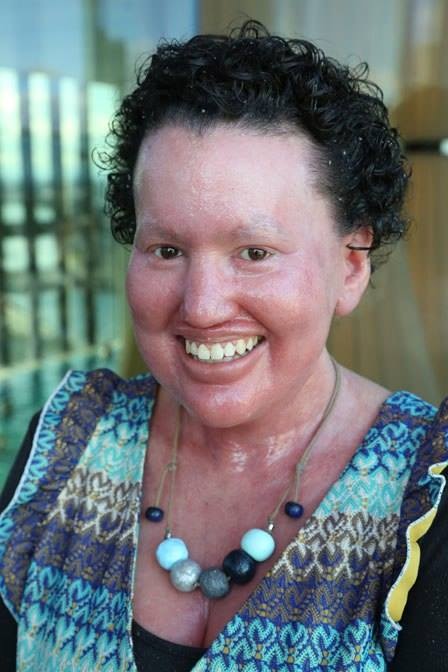
Although we’ve been celebrating the Americans With Disabilities Act this week and the strides made by the disability community, I was curious to find out how things were shaping up around the world. I was lucky enough to chat with two incredible women who shared what life is like for them. First up: Meet Carly Findlay. As an award-winning writer, speaker and appearance activist living in Melbourne, Australia, she challenges people’s thinking about what it’s like to have a visibly different appearance. You can read her blog and follow her on Twitter and Facebook. Here, she shares what she’s learned…

Labels. They’re a blessing and a curse to live with. Fat. Thin. Beautiful. Ugly. Smart. Stupid. Rich. Poor. Athletic. Lazy. Normal. Different. Disabled. Able-bodied.

Labels are temporary but can result in our identities and esteem being damaged. We can peel off the labels others stick on us. Or we can embrace them, letting them become part of our identity.

I was never labeled as having a disability or chronic illness by anyone other than myself. I was called lots of other names relating to my appearance, but never anything relating to disability.

Disability seemed so much more than a rare severe skin condition called Ichthyosis. I don’t have an intellectual impairment and my mobility isn’t affected unless I am very sore. And I don’t take enough tablets to have a chronic illness. I went through life thinking that my condition wasn’t bad for me because I coped with it daily. It was only my skin, right? That’s just a visual impairment, right? Wrong. My parents, nurses and doctors knew how severe it was, and told me that if a skin infection reached my blood stream, it could be fatal.

It wasn’t until my mid-’20s that I identified with having a disability and a chronic illness. I thought ‘disability’ and ‘chronic illness’ had really negative connotations — and why wouldn’t I when society makes ableist slurs, employment of people with disabilities is low and physical and attitudinal barriers are rife? I also never saw many positive, ordinary stories of disability in the media; disability is often portrayed as tragedy or heroic and nothing in between. There is a limited view of disability that’s portrayed in the media, both limited conditions and limited expectations. And I thought that I had to be assessed by a doctor or the government to give me a label in addition to my skin condition. A label of disability or chronic illness? I didn’t realise how positive it could be to embrace these labels.

I started mentoring at a hospital program for young people with chronic illnesses when I was 26. I wanted to provide guidance and support to them, based on my experiences. But they taught me so much more than I was prepared for. I learned about a wide range of chronic illnesses and I learned about myself. We had so much in common despite our different conditions. I realized that like them, I missed a lot of school (and work) to attend medical appointments and stay in the hospital. My condition also made it hard for me to make friends. I have more than three specialists. My condition has a really long, unpronounceable name. And it is more severe than a temporary illness like a cold or a stomach bug.

And then, a couple of years later, I immersed myself in the Melbourne disability community through writing and community TV. I saw that people with varying disabilities face the same sorts of questions, physical and attitudinal barriers and discrimination. My friends in wheelchairs receive similar, intrusive questions about their disabilities, just as I do.

Most recently, I discovered there is a vibrant and supportive community of people with facial differences.

Giving myself the labels of ‘disabled’ and ‘chronically ill’ has been very empowering. I feel great sense of belonging — and that’s as big a relief as a diagnosis is. It’s given me pride. I am proud to belong to an amazing, talented, diverse, passionate community that’s committed to improving the lives of others. It’s also given me the courage to speak up and say I can’t do something because of my body’s limitations and call out discriminatory behavior. My knowledge of the social model of disability has grown, and I’ve embraced and practiced that. I’ve become aware of sensitivities around language, which has helped me communicate better. I’ve taken control of my own health, communicating my needs to doctors and educating them during appointments and through speaking at medical conferences. And I’ve met some wonderful people who are disabled and/or chronically ill, who are affected by my skin condition or who are allies of our community. My writing and speaking career has thrived.

Above all, I’ve learned that it is OK to identify with having a disability and chronic illness, because these labels are not negative. These labels are permanently fixed to my identity and I am proud and feel included. Embracing these labels helped me to love myself.

  • Facebook
  • Twitter
  • Pinterest
  • Email

1 Comment Filed Under: A Woman's Word, ADA 25, Americans With Disabilities Act, Americans With Disabilities Act anniversary, confidence, disabilities in the media, Disability, Inspiration, inspiring women, secrets to confidence, Uncategorized

Next Page »
So About What I Said is a daily blog that covers relationships, disabilities, lifestyle and pop culture. I love to laugh and have been known to overshare. I also have an unabashed obsession with pop music, polo shirts, and PEZ dispensers. Read more...

Let's Be Friends
Pinterest
Facebook
Twitter
Instagram
Bloglovin
RSS

Contact Me
Subscribe by Email

About Us

dotted lineAbout Us
archive

Archives

So About What I Said © 2026 · Design by Maiedae · Development by High Note Designs

loading Cancel
Post was not sent - check your email addresses!
Email check failed, please try again
Sorry, your blog cannot share posts by email.